
Are you searching for a clear comparison between IBM Data Science vs IBM Data Analyst? I know how confusing it can be to choose between these two IBM certifications on Coursera.
Both programs are popular, beginner-friendly, and designed to help you start a career in data.
I’ve personally explored both the IBM Data Science and IBM Data Analyst certificates to understand how they differ in content, projects, and outcomes. In this post, I’ll share my personal experience, highlight key differences, and help you decide which one fits your goals better.
So, without any delay, let’s get started and see IBM Data Science vs IBM Data Analyst–
IBM Data Science vs IBM Data Analyst
- Quick Comparison: IBM Data Science vs IBM Data Analyst
- Topics Covered by IBM Data Science Professional Certificate–
- Topics covered by IBM Data Analyst Professional Certificate-
- IBM Data Science vs IBM Data Analyst — Which One is Better for You?
- Data Scientist vs Data Analyst
- Data Scientist: Skill Set
- Data Analyst: Skill Set
- Who Should Enroll in the IBM Data Science Professional Certificate?
- Who Should Enroll in the IBM Data Analyst Professional Certificate?
- Pricing and Value
- FAQ
- Conclusion
Quick Comparison: IBM Data Science vs IBM Data Analyst
Before we go deeper, let’s quickly compare both programs side by side. I’ve taken both, so here’s a simple overview based on my own learning experience
| Feature | IBM Data Science | IBM Data Analyst |
|---|---|---|
| Rating | ⭐ 4.6 / 5 | ⭐ 4.7 / 5 |
| Time to Complete | Around 11 months (5 hrs/week). You can finish faster depending on your pace | Around 11 months (3 hrs/week). Flexible learning speed |
| Price | 7-day free trial, then $39/month | 7-day free trial, then $39/month |
| Programming Language | Python | Python |
| Best For | Learners who want to explore Data Science, ML, and AI without prior coding experience | Learners who want to build Data Analytics and visualization skills with basic math understanding |
| Number of Courses | 12 | 11 |
| Pros | – Structured content for beginners – Includes a free IBM Cloud IDE (limited) – Great practical projects for entry-level learners | – Solid foundation in data analytics – Hands-on projects using Excel, SQL, Python, and Cognos Analytics – Ideal for complete beginners |
| Cons | – The first course, What is Data Science?, is too basic if you already know the field – Python for Data Science and AI isn’t a full Python course | – The Data Visualization with Python project is tough because of the limited guidance – Python lessons could be more structured |
👉 Check IBM Data Science Professional Certificate
👉 Check IBM Data Analyst Professional Certificate
I’ve noticed many learners don’t realize that both certificates share four common courses.
These are:
- Python for Data Science and AI
- Databases and SQL for Data Science
- Data Analysis with Python
- Data Visualization with Python
So, if you enroll in both programs, you’ll see some overlapping content. That’s actually helpful; it means you can transfer your knowledge smoothly if you decide to move from IBM Data Analyst to IBM Data Science later.
Now, let’s explore the topics each program covers in detail.
Topics Covered by IBM Data Science Professional Certificate–
I’ve completed the full IBM Data Science Professional Certificate on Coursera, and I want to share what I honestly experienced, the good parts, the parts that could be better, and what you should know before enrolling.
It’s a long but practical program that teaches data science through hands-on labs and real projects using tools like Jupyter, RStudio, GitHub, and Watson Studio.
Here’s what each course is like
Course 1 – What is Data Science?
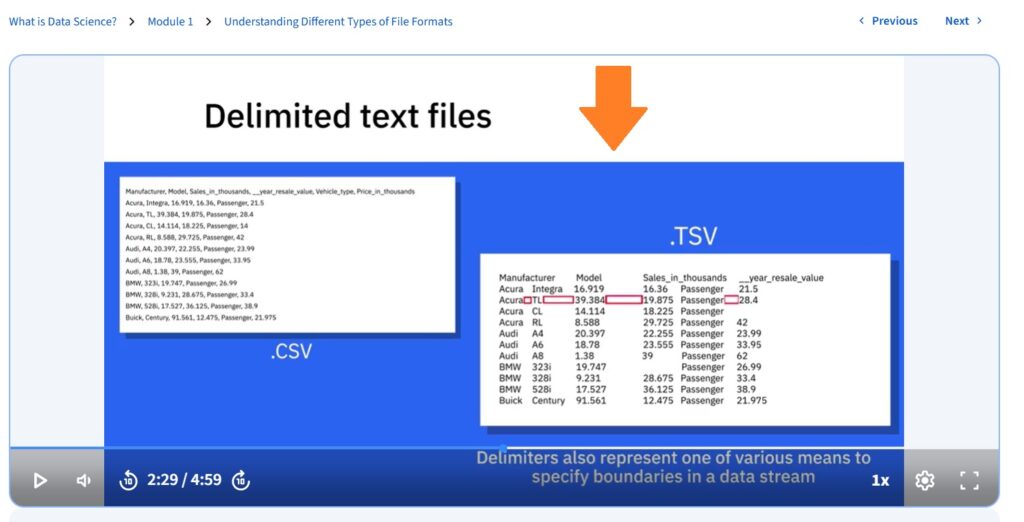
This course introduces the world of data science. It includes short videos, interviews with professionals, and explanations of career paths.
It’s a light start, perfect if you’re completely new. But if you already understand what data science is, you might find it too basic.
✅ Good introduction for complete beginners
❌ Too theoretical for those with prior knowledge
Course 2 – Tools for Data Science
Here, you explore the tools that every data scientist uses — Jupyter, GitHub, RStudio, and IBM Watson Studio. You actually use these tools during labs, which I really liked. It gives you real-world experience early in the program.
Still, if you’re not familiar with coding environments, moving between tools can feel confusing at first.
✅ Hands-on and practical learning with real tools
❌ Can feel overwhelming if you’ve never used coding environments before
If you want to start learning data science and Python from scratch, you can enroll here on Coursera
Course 3 – Data Science Methodology
This course explains how data scientists approach problems. It follows the CRISP-DM framework, from understanding the business problem to deploying a model.
It’s one of those courses that makes you think instead of just code. I liked how it connected problem-solving with data work.
However, it stays mostly theoretical. I would’ve liked more real datasets or case studies to apply the process.
✅ Great conceptual foundation for thinking like a data scientist
❌ Not enough hands-on exercises
Course 4 – Python for Data Science, AI & Development
This is where the coding starts. You learn Python basics, data types, loops, functions, and OOP, along with web scraping and APIs. It’s practical and relevant, and I enjoyed how every topic connected back to data analysis.
This course moves quickly. If you’re brand new to programming, you’ll need to practice outside the lessons to keep up.
✅ Practical Python skills with real examples
❌ Fast-paced for absolute beginners
Course 5 – Python Project for Data Science
In this course, you apply what you’ve learned so far. You work on a small project — cleaning data, visualizing it, and building a Python dashboard using Pandas, BeautifulSoup, and Plotly.
It’s a fun and simple project that connects theory to code. For me, it felt a bit too short. I completed it quickly and wished there were a few more challenges.
✅ Good first coding project to build confidence
❌ Lacks complexity for intermediate learners
Course 6 – Databases and SQL for Data Science with Python
This one is about SQL and databases, and it’s very hands-on. You’ll learn how to create tables, run queries, and integrate SQL with Python. It’s a must-have skill, and this course explains it clearly.
The only downside is that some queries feel repetitive, but repetition does help build confidence if you’re new.
✅ Excellent for learning SQL basics
❌ Could include more complex database projects
If you want to start learning data science and Python from scratch, you can enroll here on Coursera
Course 7 – Data Analysis with Python
This course dives deeper into data wrangling, EDA (exploratory data analysis), and regression modeling using Pandas, NumPy, SciPy, and Scikit-learn. It’s one of the most valuable parts of the program.
I liked how each library was explained with examples. But I did find the lab instructions a bit confusing at times; not everything worked smoothly on the first try.
✅ Strong foundation in data analysis and regression
❌ Labs need clearer guidance and better datasets
Course 8 – Data Visualization with Python
This course is all about creating visual stories with data using Matplotlib, Seaborn, Folium, and Plotly Dash. It’s engaging and very practical. You start with simple charts and end up building interactive dashboards.
The final assignment was challenging, the instructions were brief, and I had to troubleshoot a lot on my own. But completing it gave me real confidence in building visuals.
✅ Great real-world visualization experience
❌ Some projects need more instructor support
Course 9 – Machine Learning with Python
This course introduces machine learning — regression, classification, clustering, and dimensionality reduction. You’ll apply algorithms using Scikit-learn and evaluate them using metrics and validation techniques.
I enjoyed this course the most. It simplifies ML concepts well and connects them to real datasets. However, if you already know ML, you’ll find it basic. It’s meant for beginners.
✅ Excellent first step into machine learning
❌ Too simple for anyone with ML background
Course 10 – Applied Data Science Capstone
This is where you bring everything together. You choose a problem, collect data, clean it, analyze it, and build a complete notebook and presentation. It’s open-ended, so you decide the direction, which makes it exciting but also challenging.
I learned the most here. But you’ll need patience because guidance is minimal. You’ll have to figure things out yourself.
✅ Perfect for building your portfolio project
❌ Not ideal if you prefer structured step-by-step help
Course 11 – Generative AI in Data Science
This is one of the most interesting parts of the program. It shows how Generative AI tools like GPT-3.5 and ChatCSV can be used in data science — from generating data to improving workflows. You’ll also explore the ethics of using AI responsibly.
I found this course fresh and relevant, especially for those interested in AI applications. It’s short but adds a modern touch to the program.
✅ Teaches how AI is changing data science workflows
❌ Could include deeper, real-world case studies
Course 12 – Data Science Career Guide and Interview Preparation
The last course focuses on career development — building a portfolio, writing a resume, and preparing for interviews. It’s not technical, but it’s very useful. Many people finish technical courses without knowing how to present their work; this fixes that.
The examples and templates helped me polish my LinkedIn and portfolio. However, I wish there were mock interviews or peer reviews to practice.
✅ Practical job preparation advice
❌ Needs more interactive career practice sessions
If you want to start learning data science and Python from scratch, you can enroll here on Coursera
Key Skills You’ll Gain
By the end, you’ll build solid skills in:
- Python, SQL, and R
- Data Cleaning, Wrangling, and Visualization
- Machine Learning and Generative AI
- EDA, Dashboards, and Storytelling
- Portfolio and Interview Preparation
My Honest Take on the IBM Data Science Professional Certificate
After completing this program, I can say it’s one of the best starting points for beginners in data science. It’s practical, structured, and easy to follow, with real projects that you can showcase.
But it’s not a deep-dive program. If your goal is to master advanced ML or deep learning, you’ll need to study further after finishing this.
If you’re a beginner or early learner, this program gives you everything you need to start building real projects and confidence. If you’re already an intermediate, treat it as a structured refresher and focus more on the project parts.
✅ Best for beginners entering data science or switching careers
❌ Too basic for advanced learners who want deep technical skills
Topics covered by IBM Data Analyst Professional Certificate–
I’ve gone through the full IBM Data Analyst Professional Certificate on Coursera. It’s an 11-course program focused on helping you build the technical and analytical skills needed to start working as a data analyst.
You don’t just learn theory here. You’ll work on hands-on projects using Excel, SQL, Python, and Cognos Analytics. By the end, you’ll complete a real-world capstone project that ties everything together.
Here’s my honest take on what each course covers and what you should expect
Course 1 – Introduction to Data Analytics
This course sets the foundation. It explains what data analytics is, the steps in the process, and how it differs from data science or business analytics. I liked how clearly it explained each data role. It helps beginners understand where they fit.
But it’s an overview, not a deep dive. You won’t touch tools or code yet.
✅ Good orientation for complete beginners
❌ Too basic if you already know what analytics is
Course 2 – Excel Basics for Data Analysis

Here, you start working hands-on with Excel. You’ll learn cleaning, sorting, filtering, using pivot tables, and basic formulas.
I liked this part because it’s practical. You actually analyze small datasets. But I did feel the pace was a bit slow, especially if you already use Excel.
✅ Strong foundation in Excel data analysis
❌ Repetitive for those with prior Excel experience
If you’re ready to start your data analytics journey, you can join the IBM Data Analyst Certificate here.
Course 3 – Data Visualization and Dashboards with Excel and Cognos
This course helps you move beyond numbers and create visual stories. You’ll make charts, dashboards, and reports using Excel and IBM Cognos Analytics.
The projects here are fun. I built an interactive dashboard using car sales data, and it felt close to a real job task. However, if you’ve never used Cognos, the interface might take time to get used to.
✅ Teaches real dashboard creation and storytelling
❌ Cognos setup can be tricky for first-timers
Course 4 – Python for Data Science, AI & Development
Now the focus shifts to coding. This course introduces Python, covering syntax, data types, loops, functions, and APIs. You’ll also do some web scraping and data extraction using BeautifulSoup and requests.
I enjoyed the practical parts, especially how Python connects to real data. But it moves fast. If you’ve never coded before, expect to pause and practice.
✅ Good first Python course for analytics
❌ Fast-paced for absolute beginners
Course 5 – Python Project for Data Science
This course gives you your first small project in Python. You’ll act like a data analyst, collecting, cleaning, and visualizing data using Pandas, BeautifulSoup, and Plotly.
I liked how everything came together here. It helped me see the value of Python beyond syntax. Still, I wish it included more complex datasets.
✅ Practical and confidence-building
❌ Projects are too short for deeper learning
If you’re ready to start your data analytics journey, you can join the IBM Data Analyst Certificate here.
Course 6 – Databases and SQL for Data Science with Python
This is where you learn SQL, one of the most important skills for analysts. You’ll create databases, run queries, and integrate them with Python.
The exercises are very practical. You’ll query real datasets like crime and census data. Some labs repeat similar tasks, but that helps you get comfortable writing queries.
✅ Excellent hands-on SQL practice
❌ Could use more real business scenarios
Course 7 – Data Analysis with Python
Here you start analyzing real datasets using Pandas, NumPy, and Scikit-learn. You’ll clean data, explore trends, and build regression models to predict values.
This course was one of my favorites. It bridges Python and real analysis very well. But the labs could be better explained. A few instructions weren’t clear, which slowed me down.
✅ Strong focus on analytics and regression modeling
❌ Labs need better clarity and error handling
If you’re ready to start your data analytics journey, you can join the IBM Data Analyst Certificate here.
Course 8 – Data Visualization with Python
This course focuses on building data stories using Matplotlib, Seaborn, Folium, and Plotly Dash. You’ll make charts, plots, and even interactive dashboards.
I found it very engaging. The part where you build a flight reliability dashboard was close to real-world reporting. However, the final assignment felt rushed, not enough explanation for the advanced plots.
✅ Practical exposure to real visualization tools
❌ Final project lacks detailed guidance
Course 9 – Data Visualization and Storytelling with BI Tools
This course focuses on the storytelling side of analytics. You’ll work with Cognos Analytics again to build interactive dashboards and explore business data visually. It’s a good step if you want to learn presentation and stakeholder-facing skills.
The labs were helpful but could use more case studies to make storytelling feel more realistic.
✅ Great for building business communication and presentation skills
❌ Needs more real-world storytelling examples
Course 10 – Generative AI for Data Analytics
This was one of the most interesting parts of the program for me. It shows how Generative AI tools like GPT and Prompt Engineering can help in data cleaning, visualization, and storytelling.
It’s not too technical, but it’s eye-opening. You’ll also learn about AI ethics, something often missed in analytics courses. I liked the balance of practical and conceptual parts.
✅ Introduces AI-driven analytics techniques
❌ Still quite basic; no deep generative modeling projects
Course 11 – Data Analyst Career Guide and Interview Preparation
This is the final course, and it focuses on career readiness. You’ll learn how to create a data portfolio, write a strong resume, and prepare for interviews.
I found this extremely useful, especially the portfolio tips. But like many career modules, it’s more guidance than practice. I wish there were real mock interviews or peer feedback.
✅ Helpful for building a professional presence
❌ Could include live interview simulations
If you’re ready to start your data analytics journey, you can join the IBM Data Analyst Certificate here.
Key Skills You’ll Build
By the end of this certificate, you’ll have solid hands-on skills in:
- Excel, SQL, and Python for analytics
- Data cleaning, wrangling, and visualization
- Dashboards with Cognos and Plotly Dash
- Exploratory data analysis and regression modeling
- Generative AI and storytelling with data
- Portfolio and interview preparation
My Honest Take on the IBM Data Analyst Professional Certificate
This program is one of the most well-rounded options for beginners who want to start a data analytics career. It teaches both technical and soft skills, from working with data to communicating insights effectively.
What I liked most is that you get to practice every major tool used in real jobs, Excel, SQL, Python, and Cognos. You also build projects that you can showcase in your portfolio.
But it’s not perfect. Some courses feel repetitive, and the labs could use better explanations. Also, if you’re already an intermediate analyst, you’ll find the content basic.
If you’re new to data analytics, this certificate will give you the confidence and skills to start applying for entry-level roles. If you already know the basics, you can skip a few early courses and focus on the projects and AI modules.
✅ Best for beginners aiming for entry-level data analyst roles
❌ Too basic for those with prior experience or advanced technical skills
IBM Data Science vs IBM Data Analyst — Which One is Better for You?
Now that you know what both programs cover, let’s answer the big question: IBM Data Science vs IBM Data Analyst — which one should you choose?
To decide, you first need to understand what each role actually does.

Data Scientist vs Data Analyst
A data scientist works on large, complex datasets, both structured and unstructured. They use programming, statistics, and machine learning to uncover patterns and make predictions.
Their work often involves model building, automation, and experimenting with data to find insights that shape long-term business strategy.
In simple terms, data scientists create solutions. They build systems that help companies forecast outcomes, automate tasks, and make smarter decisions. If you’re more interested in coding, algorithms, and AI, this path fits better.
A data analyst, on the other hand, focuses on understanding and interpreting existing data. They collect, clean, and analyze information to explain trends and help businesses make decisions.
Their work is closer to reporting, dashboarding, and communicating insights in a clear, visual way.
Analysts translate data into simple stories and business recommendations. They don’t build models but help teams understand what the numbers actually mean. If you enjoy working with Excel, SQL, and visualization tools and you like turning data into insights, this is your path.
In simple words, a data scientist builds models to predict, while a data analyst explains what has already happened using data. Both roles are valuable, but they require slightly different skills and mindsets.
Now let’s see what skill sets are required for a Data Scientist and a Data Analyst-
Data Scientist: Skill Set
A Data scientist requires the following skill sets-
- Strong statistical and analytical knowledge
- Good understanding of machine learning and deep learning
- Ability to perform data mining and feature engineering
- Proficiency in programming languages like Python, R, and SAS
- Understanding of cloud tools and model deployment
Data Analyst: Skill Set
- Good grasp of data processing and data cleaning
- Strong command of Excel and SQL
- Knowledge of data visualization tools like Power BI or Cognos Analytics
- Understanding of Google Analytics or Adobe Analytics tools
- Basic programming skills in Python (optional but useful)
- Good storytelling and presentation abilities
I hope you now understand the basic difference between a Data Scientist and a Data Analyst. Now let’s see who should enroll in which certification program between IBM Data Science and IBM Data Analyst.
Who Should Enroll in the IBM Data Science Professional Certificate?
- Choose this if you want to move toward data science or AI-related careers.
- It’s a great program for beginners who want to learn the foundations of data science, Python, and machine learning.
- It’s also ideal if you’ve been away from technical tools for a while and want to refresh your hands-on skills.
Who Should Enroll in the IBM Data Analyst Professional Certificate?
- Choose this if you’re just starting your journey in data analytics.
- It’s perfect for learners who are comfortable with basic math and want to build skills in Excel, SQL, Python, and dashboards.
- You’ll learn how to clean, analyze, and visualize data for business decision-making.
NOTE- Completing either program won’t instantly make you a Data Scientist or Data Analyst. These courses give you the foundational skills and guided projects you need to start building experience. After finishing, it’s important to work on your own projects — apply what you learned to real data, publish your work on GitHub, and grow your portfolio.
That’s what turns this certificate into something meaningful when you apply for jobs.
Pricing and Value
Both certificates are available on Coursera with a 7-day free trial and then $39/month after that. How much you spend depends on your learning speed.
If you study consistently for 5–6 hours per week, you can finish in about 5–6 months, which keeps your cost low. If you’re a slower learner or exploring both programs, Coursera Plus can be a better choice. It gives you unlimited access to IBM courses and other specializations under one subscription.
Financial aid is also available directly on Coursera, which is great if you’re a student or just starting out.
FAQ
Conclusion
I hope this IBM Data Science vs IBM Data Analyst comparison has cleared your doubts, and now you can easily choose the one that suits you. If you have any questions, feel free to ask me in the comments section. I am here to help you. And if you found this article helpful, share it with others to help them, too.
All the Best!
Happy Learning!
You May Also Be Interested In
15 Best Online Courses for Data Science for Everyone in 2026
Data Analyst Online Certification to Become a Successful Data Analyst
8 Best Data Engineering Courses Online- Complete List of Resources
Best Course on Statistics for Data Science to Master in Statistics
8 Best Tableau Courses Online- Find the Best One For You!
8 Best Online Courses on Big Data Analytics You Need to Know in 2026
Best SQL Online Course Certificate Programs for Data Science
7 Best SAS Certification Online Courses You Need to Know
Data Analyst Online Certification to Become a Successful Data Analyst
15 Best Books on Data Science Everyone Should Read in 2026
Thank YOU!
Explore More about Data Science, Visit Here
Thought of the Day…
‘ It’s what you learn after you know it all that counts.’
– John Wooden

Written By Aqsa Zafar
Aqsa Zafar is a Ph.D. scholar in Machine Learning at Dayananda Sagar University, specializing in Natural Language Processing and Deep Learning. She has published research in AI applications for mental health and actively shares insights on data science, machine learning, and generative AI through MLTUT. With a strong background in computer science (B.Tech and M.Tech), Aqsa combines academic expertise with practical experience to help learners and professionals understand and apply AI in real-world scenarios.